October 28, 2025
Agri-environment, Biodiversity Net Gain, Consultancy, Ecology, Environmental Design, Green Infastructure, Health and Wellbeing, Heritage Environments, Historic Environment, Landscape Architecture, Landscaping, Masterplanning, NPA, Planning, Strategic Advice, Urban Landscapes and Public Realm
National Trust is developing Saltram East, a new free-to-access Country Park near Plymouth. Phase one of the project delivers wildflower meadows and 2.5km of multi-user trails connecting locals to an expansive accessible green space, rich with biodiversity and history. We worked closely with National Trust to develop strategic ecological and landscape transformation plans that prioritise nature, heritage and accessibility.
Activating the Space
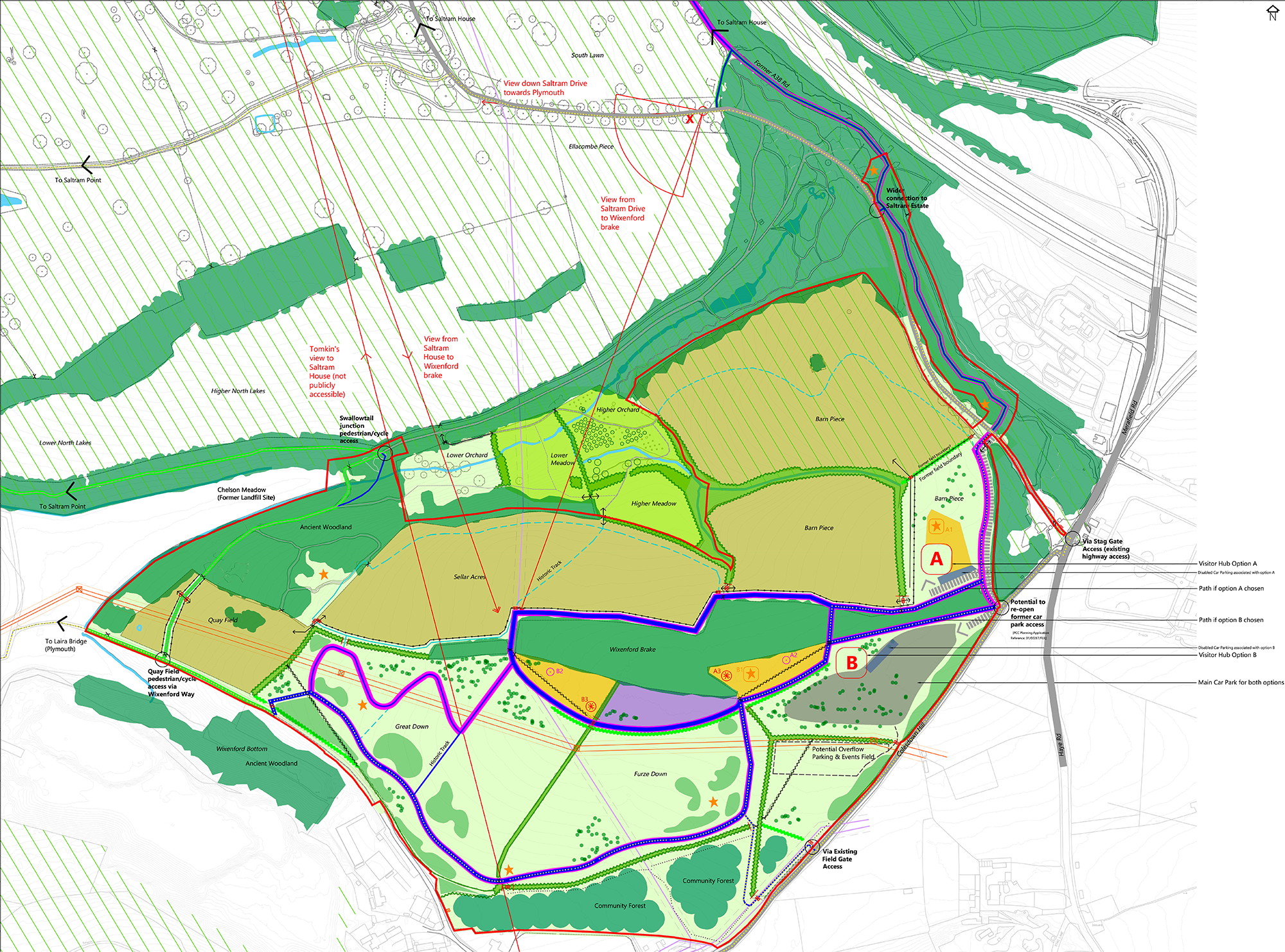
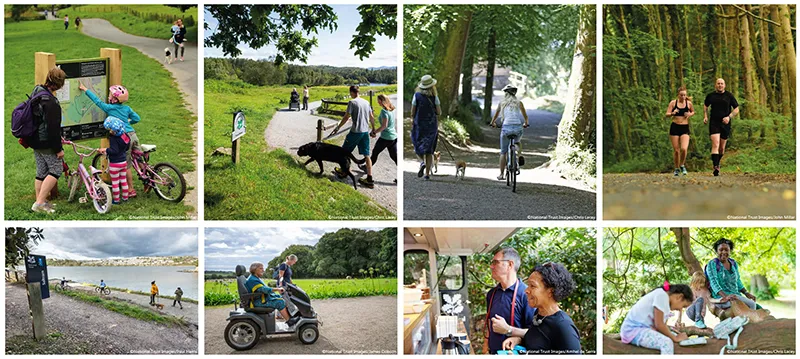
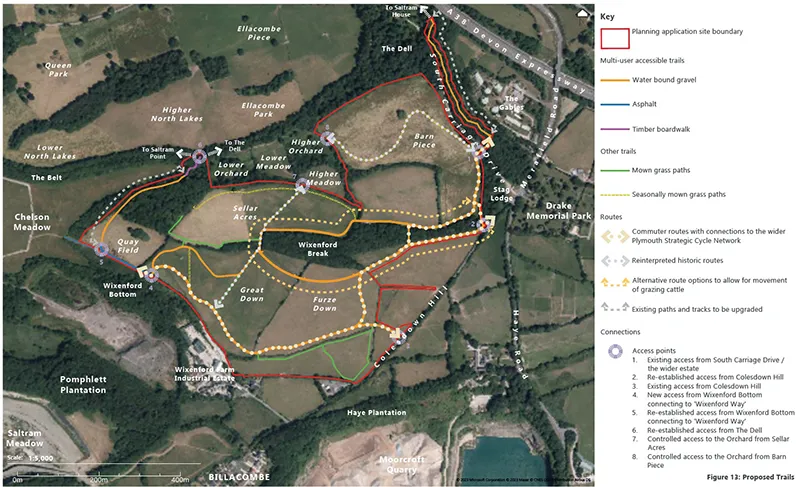
The new Country Park is connecting the estate to the network of recreational routes that are already provided, as well as the wider area of Plymouth and its nearby communities, by linking the existing local walking and cycle network with 2.5km of new multi-user trails. Accessibility is at the heart of the design of the new Country Park, and the trails have been designed to be suitable for pedestrians, cyclists, wheelchairs, pushchairs and tramper mobility scooters.
The undulating terrain required careful analysis to integrate the trail network naturally into the landscape, avoiding steeper gradients and creating a great visitor experience journey. A careful balance between access and conservation has been achieved to sensitively integrate the Country Park with the existing landscape, ecological and historic context, while encouraging exploration across the 32 hectares of the new Country Park. The trails element of the new Country Park is part funded by a generous grant from Sport England, and design collaboration on the layout for the trails network also involved National Trust and Sport England. This positive collaboration has ensured that the trails will be suited to many different users and will provide the fullest experience of the new Country Park’s vistas and landscape. As works progress, future phases will include tree planting, incidental play features, interpretation signage and activity zones.
Nature Recovery through Habitat Enhancement
Our ecology team worked closely with National Trust to embed Biodiversity Net Gain (BNG) at the heart of the Saltram East proposals, helping the Trust navigate emerging UK legislative requirements while taking a proactive and positive approach to nature recovery across the estate. This work began with a programme of site surveys and UK Habitat Classification mapping, establishing a robust ecological baseline and identifying areas of land best suited to long‑term habitat enhancement and restoration.
Building on this evidence base, we prepared detailed on‑site BNG resource mapping to give National Trust a clear understanding of the location, condition and suitability for habitat enhancements within the new Country Park. This work supports both the delivery of biodiversity gains for the current scheme and a coordinated approach to future planning applications, enabling enhancements to be planned, delivered and evidenced in a way that responds to the evolving needs of the estate.
The proposals focus on protecting existing ecological assets while delivering targeted habitat enhancement, including increased species diversity within meadow swards and the strategic planting of trees, shrubs and hedgerows. These measures informed the Ecological Impact Assessment (EcIA) and supported the preparation of planning‑stage submissions and pre‑commencement requirements, demonstrating how biodiversity improvements would be delivered on‑site in line with national policy and legislative expectations. To secure these outcomes over the long term, we prepared a Habitat Management and Monitoring Plan (HMMP), setting out practical management and monitoring measures to ensure that biodiversity gains are sustained through adaptive land management practices such as conservation grazing.
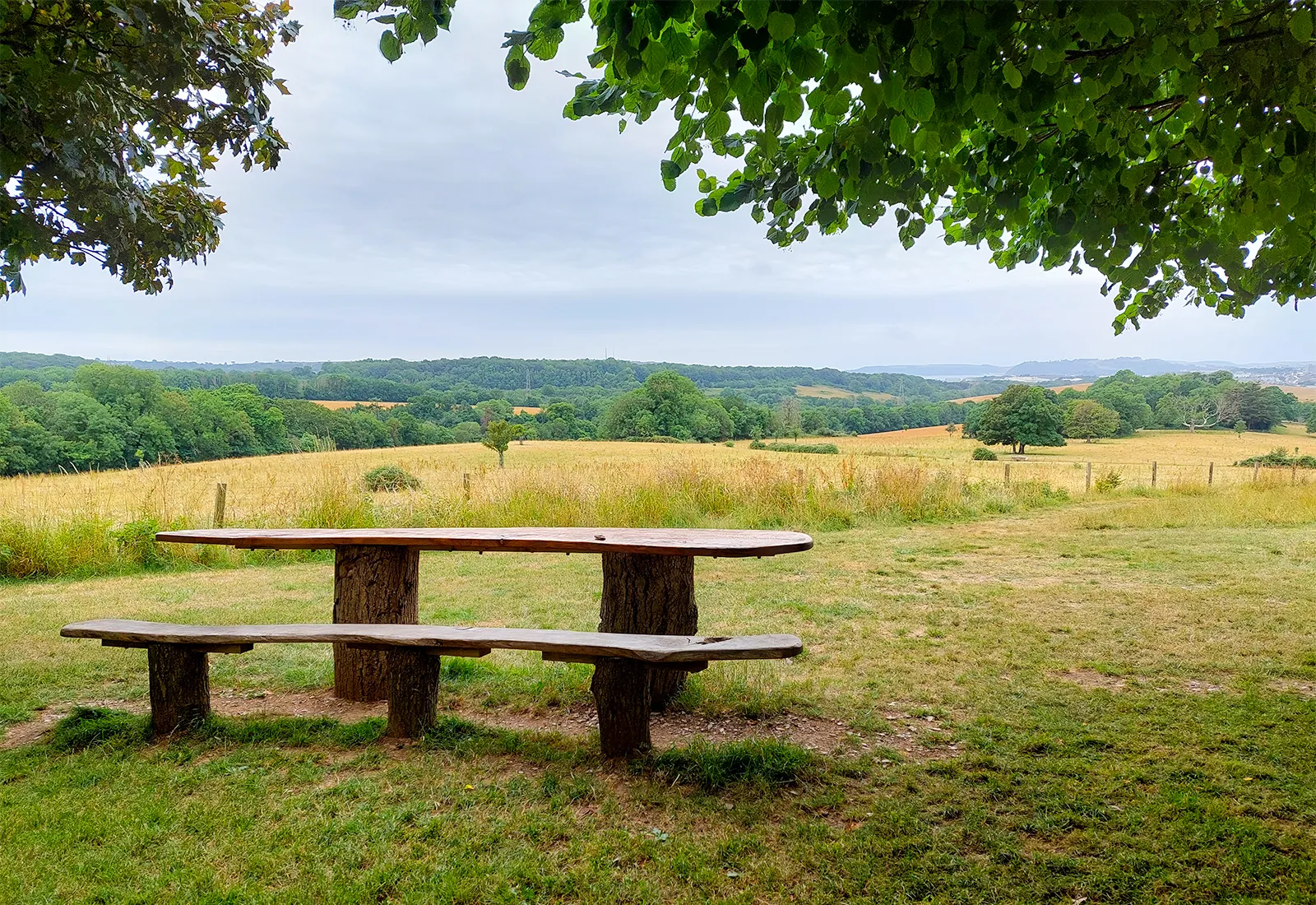
Bench with Saltram Park in the background
Future Saltram – The Big Vision
This is the first phase of the development of Saltram East new Country Park. Over the coming years, a series of access and activity interventions will transform areas of the Saltram Estate into a vibrant green lung for Plymouth. This will help to deliver part of the local planning Policy for strategic green space on the eastern edge of the city, providing a resource for recreation, healthy lifestyles and learning. Highlights will include play areas, an outdoor events space, and a purpose-built wheeled activity zone for scooters, wheelchairs, push bikes, and assisted bikes.
“The green spaces in our towns and cities are so important to us all – they’re places to unwind, to play, to improve our health, and to support wildlife. We want to bring nature closer to people’s doorstops, and by opening up this area of land, we hope to do just that for more people in Plymouth.” – Hilary McGrady, Director of National Trust
Historical Landscape Inspiration
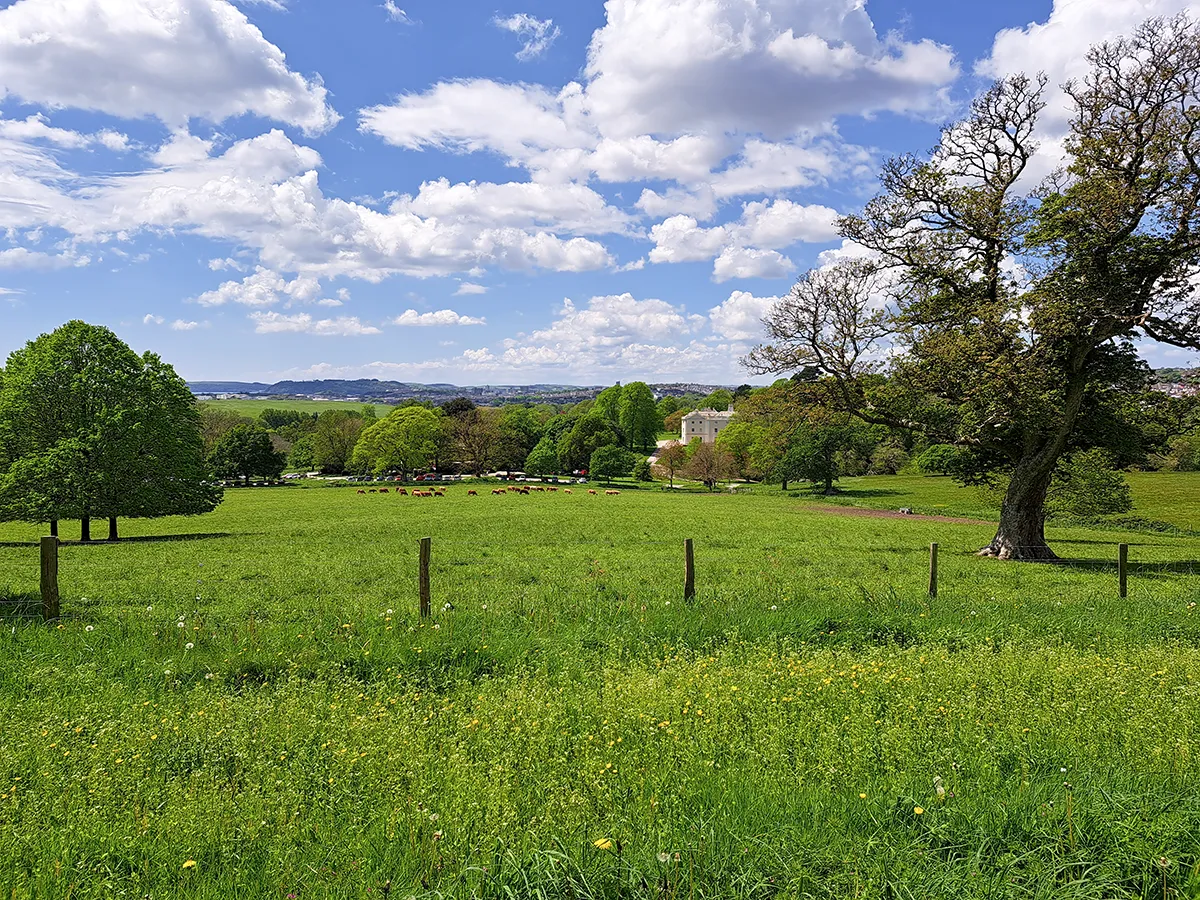
Much of the landscape of the Saltram Estate is designated on the Register of Parks and Gardens of Special Historic Interest as grade II*, and as an outstanding nationally significant eighteenth-century landscape. The northern extent of the new Country Park lies within the designated area, and its north-facing slopes also form part of the Essential Setting to the historic parkland. In this context, the park preserves the setting of the Register Park while opening the space for appreciation of the area’s heritage. The new Country Park forms a significant part of the historic visual setting to the designed landscape of Saltram Park, with it once captured in views of the estate in an 18th-century painting by William Tomkins. In the painting, the rolling hills, tree plantations and farmland form the foreground to the estate, demonstrating an appreciation of the improved and productive landscape. The historic view will be reimagined with a replica viewpoint for everyone to enjoy. Our collaboration with Nicholas Pearson Partnership ensured that the key design features of the wider historic landscape informed the landscape design. As part of the wider network of trails, historic tracks will be reinterpreted, reviving traditional routes once used to navigate the landscape.
Collaborative Design Process
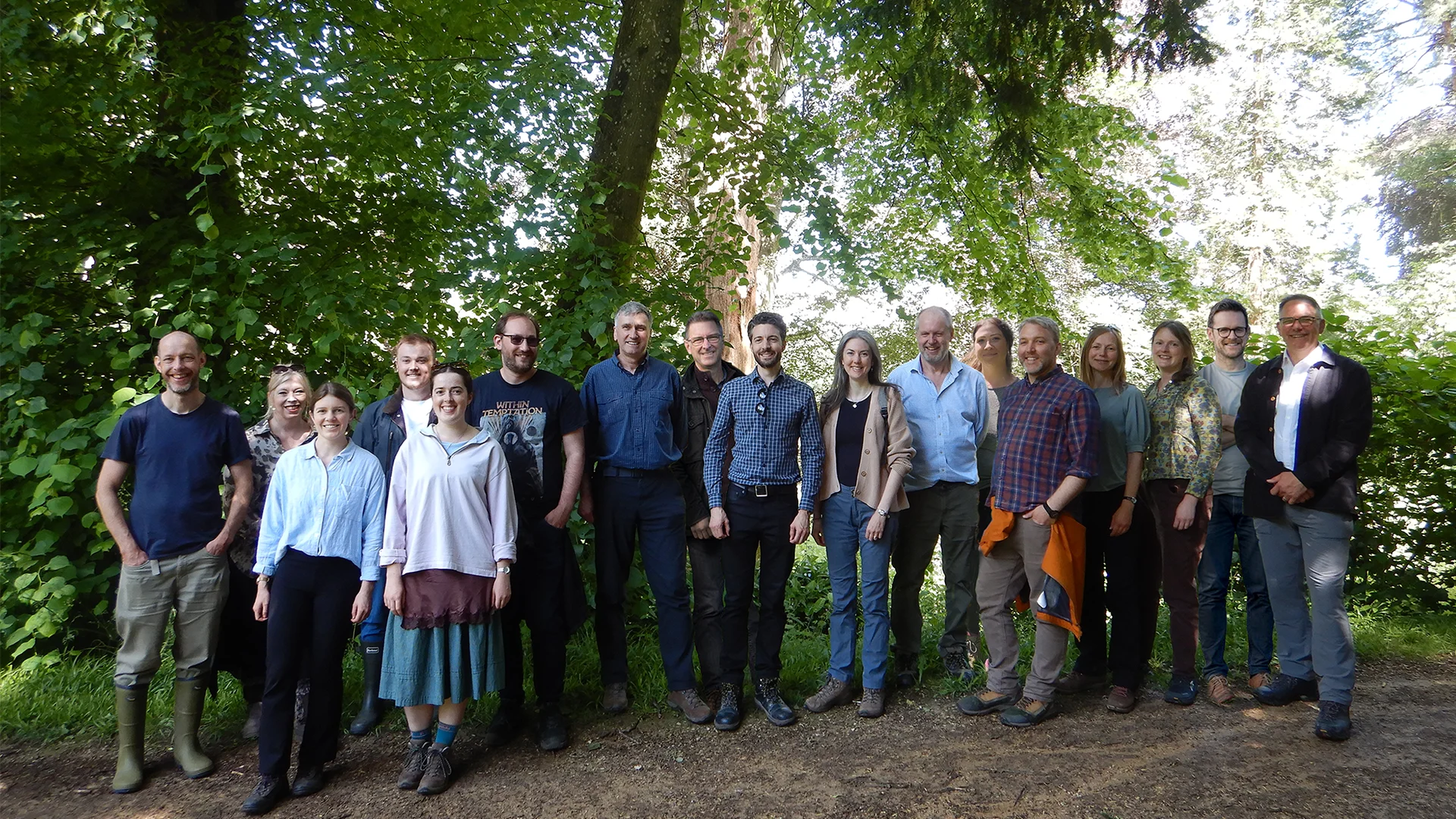
At Nicholas Pearson Associates, collaboration is one of our core values, and this was demonstrated throughout the survey, design and planning phases of the project. This teamwork involving the client group, co-consultants and members of our Landscape & Ecology teams ensured a cohesive environmental design was created that balances ecological integrity with landscape vision, community needs and historic influences. The result of that collaboration is a scheme that delivers real value and has already received enthusiastic feedback from the public on National Trust’s social channels.
Article co-authored with Katie Lewis
Planning consent was granted in Spring 2025 and work started on site in Summer 2025.