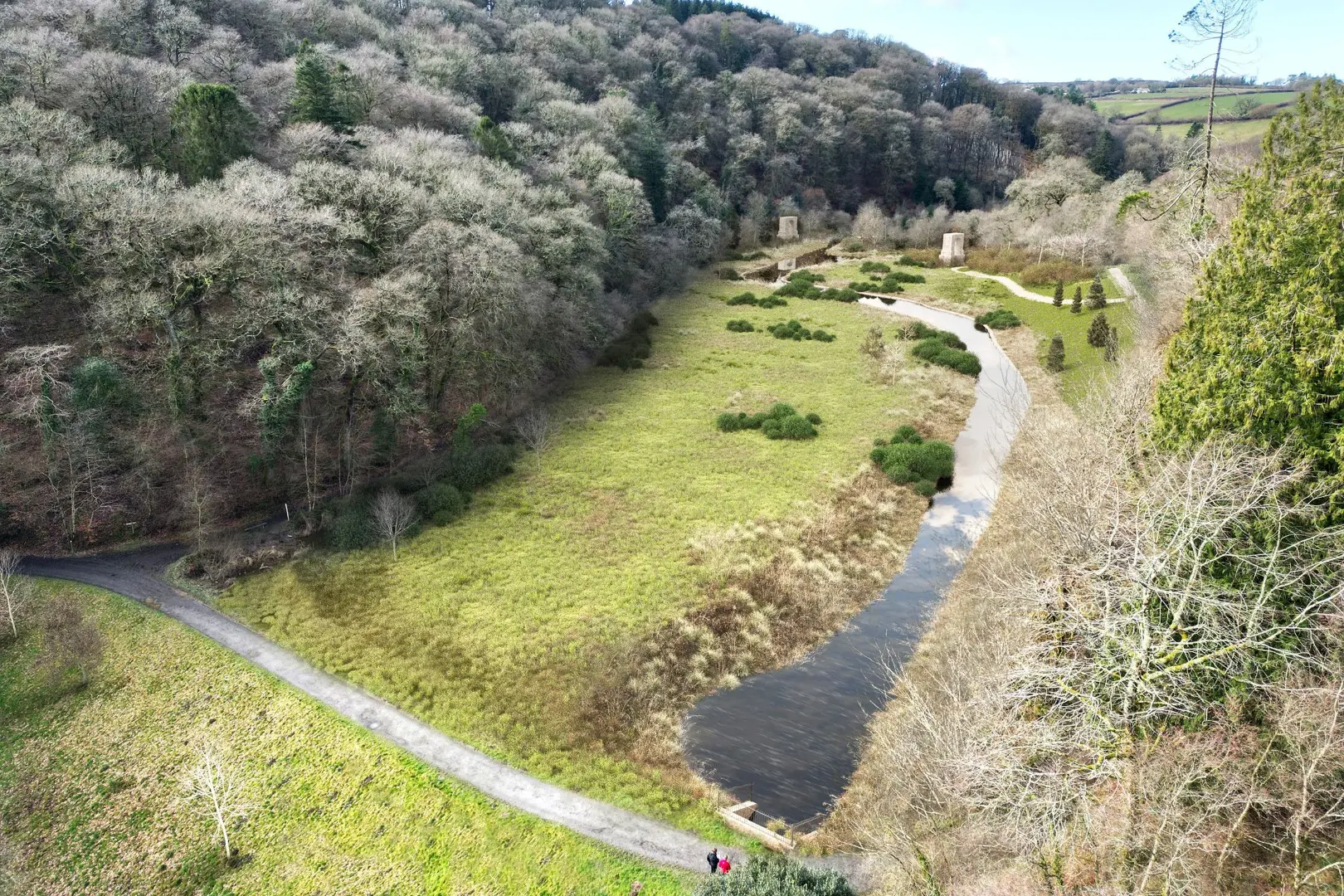
National Trust needed to adapt the historic lake and dam at Arlington to improve fish and eel passage whilst maintaining the ecological value of the River Yeo and the designed landscape. Nicholas Pearson Associates was commissioned to provide environmental design services, combining landscape design and visualisation, to help National Trust develop a coordinated proposal for planning. Our work focused on integrating a new fish and eel pass into the existing outlet structures so that it sat comfortably within the Grade II* registered historic landscape and the Arlington Site of Special Scientific Interest. The project required close coordination with engineers and heritage consultants through RIBA Stages 2 and 3 for planning.
What made this particularly challenging was balancing the sensitivities of the historic dam and lake setting with ecological objectives for fish and eel movement along the River Yeo. The lake forms part of the setting of Grade II* Arlington Court and lies within the Arlington Site of Special Scientific Interest, designated for its rich lichen flora and important invertebrate assemblages. The design needed to respect arboricultural constraints, manage silt and address health and safety requirements, whilst meeting the engineering needs of the new fish and eel pass and associated water control structures.
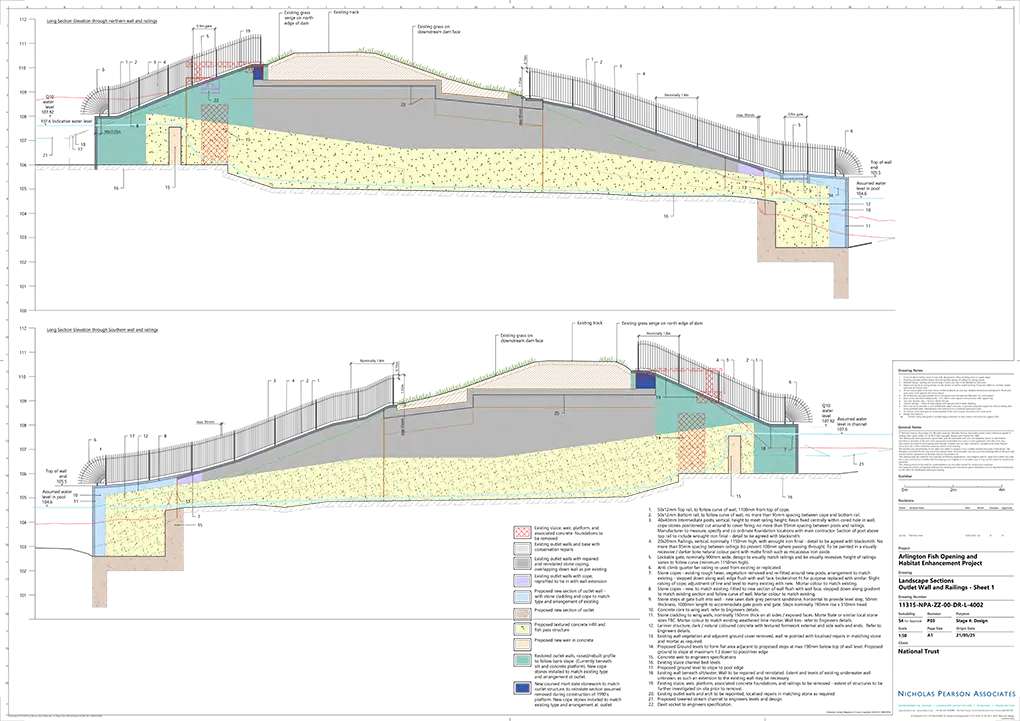
We needed to understand how best to integrate the new fish and eel pass within the historic lake and surrounding parkland. Our environmental design approach combined feasibility studies, landscape design and 3D visualisation to test outlet wall profiles, materials, finishes and railings. We worked alongside Engineers – JBA Consulting and Heritage Consultant – Nicholas Pearson Partnership from RIBA Stage 2 concept design through to RIBA Stage 3 spatially coordinated design. The design work considered the early nineteenth century landscape, existing heritage structures, water vole habitat, silt management, veteran trees and long-term management and maintenance of the structure. Visualisations were used to compare options and to show how planting design, paths and access arrangements around the lake could support the technical performance of the fish and eel pass.


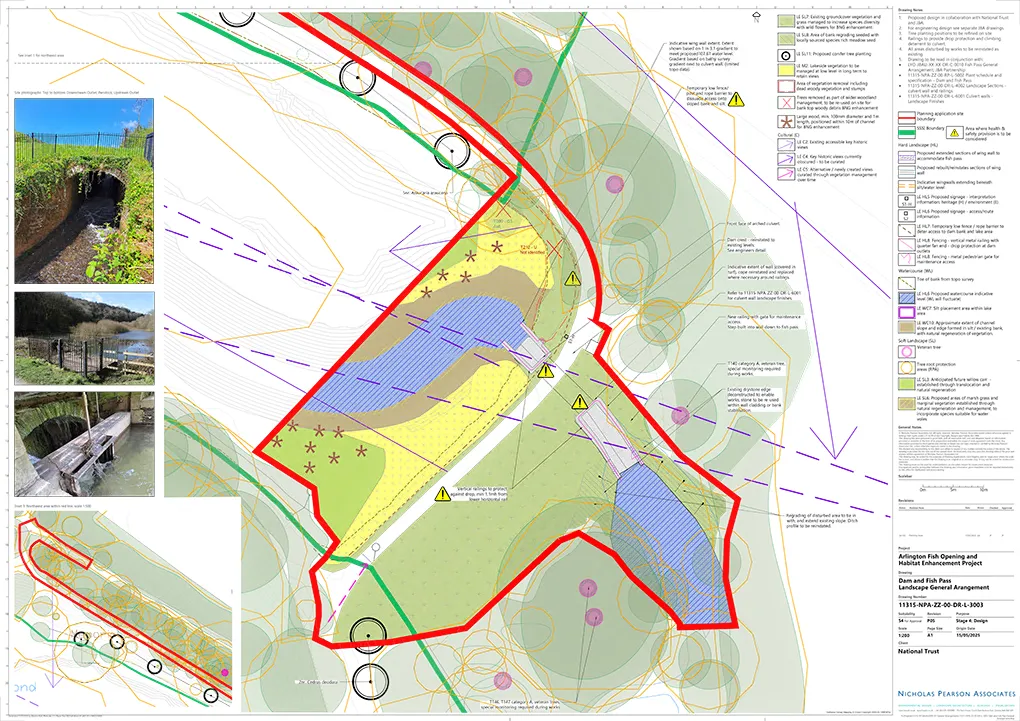
Our work translated the feasibility study and options appraisal into a coordinated set of landscape and environmental design proposals for the lake outlet. We developed materials and finishes for the outlet walls, spillway and railings so that the new fish and eel pass related to the existing stonework and wider parkland character. Planting design focused on habitat enhancement around the lake margins, retaining veteran trees and supporting water vole habitat whilst allowing safe access for inspection and maintenance. The proposals responded to Biodiversity Net Gain objectives alongside engineering design criteria for water levels, flows and silt management. Landscape drawings, planting schedules and planting specifications were prepared to support the planning application and to set out the intended landscape and habitat enhancements.
We found that clear visual material was important to explain how the proposed fish and eel pass and associated structures would sit within the historic lake and parkland. Our drawings and visualisations supported discussions between the National Trust project team, Engineers – JBA Consulting and Heritage Consultant – Nicholas Pearson Partnership as the design progressed. Collaborators included MDA Consulting for cost consultancy, the National Trust Project Manager, Suber Greenspace for arboricultural advice, Cornwall Environmental Consultants for Ecological Impact Assessment and Arcadis Consulting. The material assisted National Trust in explaining the proposals to Historic England and the Environment Agency as key stakeholders for the registered parkland and river corridor and accompanied the planning submission to North Devon Council as Local Planning Authority.


The environmental design proposals supported National Trust in securing planning permission from North Devon Council for the fish and eel pass and associated works to the historic dam and lake. The approved scheme improves ecological connectivity for fish and eels along the River Yeo whilst supporting the long-term sustainability of the lake and its role within the registered historic landscape and Site of Special Scientific Interest at Arlington.
We have provided visualisations to test design options throughout the design process. A suite of landscape design documentation, including habitat enhancements was prepared and final verified views provided to inform the planning application.
To discuss how we can help you with your project, please get in touch.
Our values and value-led approach to Environmental Design help you to achieve your project’s potential We get to know our clients and provide pragmatic guidance and design solutions We can be [...]
Read moreOur value-driven approach to Landscape Architecture is designed to help you realise your project’s full potential We take the time to understand your goals and provide tailored design solutions [...]
Read moreOur ecologists will help you understand the biodiversity potential of your site We will get to know your site and build a consultancy relationship that you can depend on Our ecological site surveys [...]
Read moreOur talented team will help you to understand your site’s potential and visualise it’s development opportunities We can provide you with a range of photographic and digital services to suit your [...]
Read more
Project Introduction Branna Limited needed professional townscape assessment expertise as part of a...

Understanding Heritage Impact in Bristol’s Gateway 33 Horsefair Limited sought planning...
Deeley Freed and LaSalle Investment Management needed to secure planning approval for a major...
Cellnex UK, are providing 25 years of mobile signal improvements for Network Rail NPAVisuals were...



