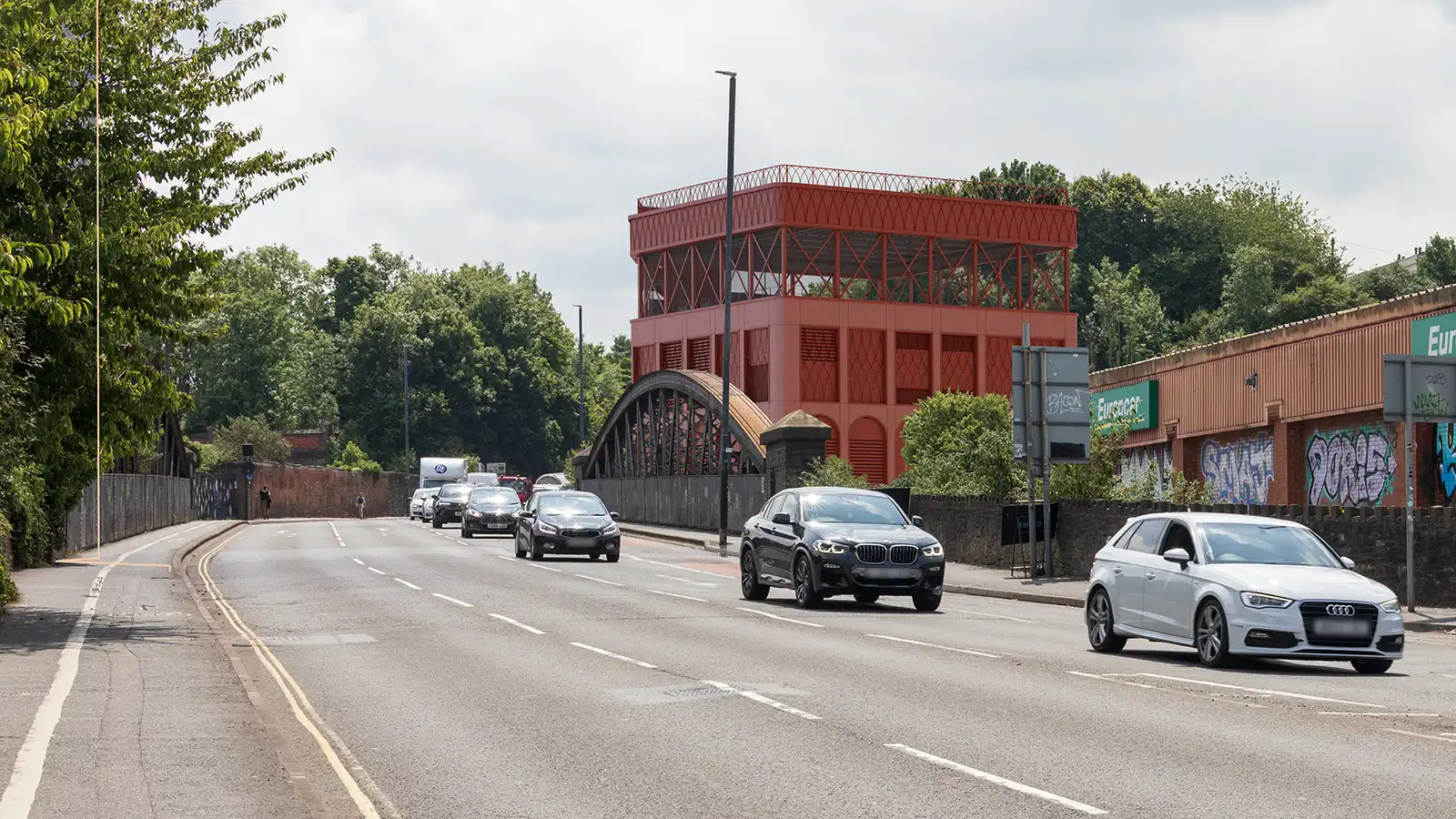
Vattenfall UK required a Townscape and Visual Impact Assessment to support a planning application for a proposed energy centre on Bath Road. Nicholas Pearson Associates was commissioned to complete a Townscape and Visual Impact Assessment (TVIA) and to prepare Verified Views to assist the Local Planning Authority and consultees in understanding likely visual effects. The site is beside a major city approach, with views to landmark skylines and close to the railway. Our brief covered baseline townscape and visual analysis, scoping and agreement of representative viewpoints, and the production of AVR3 Verified Views aligned to industry guidance to show the proposed building within its evolving urban context.
The project required robust assessment for a compact but prominant building in a visually sensitive corridor. Key issues included potential effects on strategic and heritage views, sequential experience along Bath Road, a key route into the city, and complex visual receptor groups. These included residents from elevated locations within Totterdown to the south, as well as rail users and pedestrians. Requirements included adherence to GLVIA3 and LI photography guidance, agreement of a proportionate study area using a ZTV, and production of detailed and fully rendered verifiable visuals (Type 4 AVR3). Access, safety and permissions were also necessary for viewpoint photography from Temple Meads station platform.
We followed GLVIA3 to establish baseline townscape and visual conditions, identify receptor groups and judge sensitivity. A Zone of Theoretical Visibility informed viewpoint scoping which we discussed and agreed with Bristol City Council. Photography was undertaken to Landscape Institute Guidelines. Verified Views were produced to AVR3 standard, with wireline, shaded massing and rendered views as required to show scale, form and material intent including the upper screen band. Landscape and visual reasoning focused on enclosure and skyline relationships.
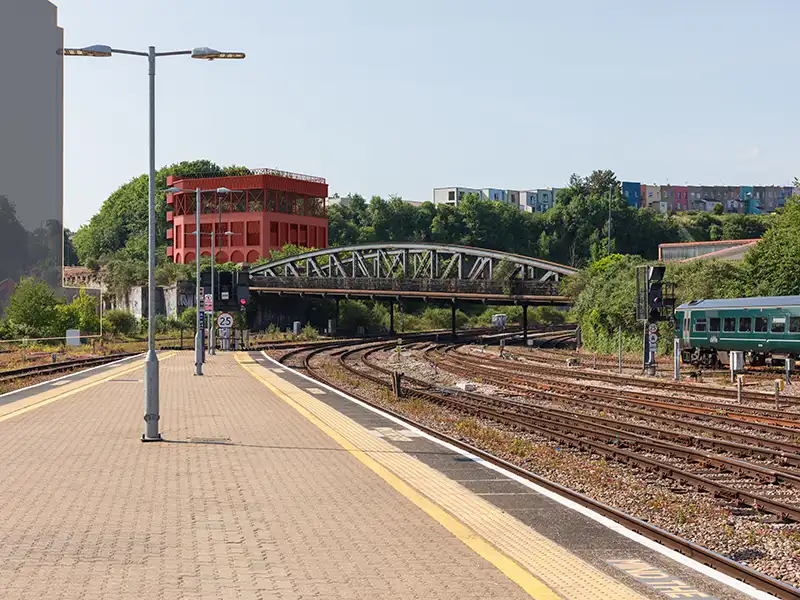
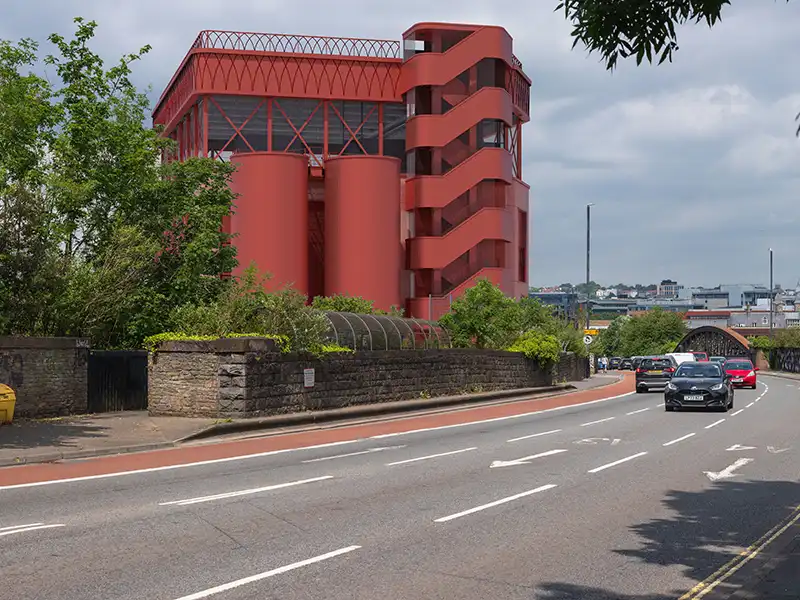
We delivered a proportionate TVIA structured around local, mid‑distance and elevated receptor areas, describing city approach views, platform and train views, and residential streets with seasonal variation. The assessment set out sensitivity and magnitude judgements and summarised effects by receptor group. We produced AVR3 verified view montages from agreed locations on Bath Road, Bristol Temple Meads platforms and elevated Totterdown streets, using surveyed camera stations and horizon checks to validate alignment. Rendering showed the local Bristol Byzantine style building form with a carefully selected red colour material palette and an upper screen band to illustrate rooftop plant integration. Where vegetation obscured views in summer, we included winter‑condition commentary to meet TVIA best practice. Photography methodology included detailed information to support audit. Collectively, these materials enabled clear comparison of baseline, wireline and proposed scenarios and provided consistent reference material for design iteration and planning submission documents.
The TVIA and VVMs supported communication with the Local Planning Authority and informed discussions with planning officers on design quality, townscape effects and lighting. Sequential journey effects along Bath Road were illustrated using paired baseline and proposed frames to show localised enclosure and limited skyline interruption. From Temple Meads platforms, visuals showed partial concealment by bridge structures and vegetation. Elevated Totterdown viewpoints confirmed that distant skyline views were retained, with the proposal reading as a new foreground element of limited extent. These materials were integrated into the planning submission and used to evidence proportional effects across receptor groups.
The combined assessment and visual outputs presented consistent, policy‑aligned suite of documents for a prominent site within the Bristol Temple Quarter. They documented beneficial aspects linked to regeneration and a coherent built form, whilst identifying adverse elements related to height, scale and localised view interruption. The final documents formed part of the planning submission, providing verifiable reference material for officers and consultees and a clear audit trail.
Please contact us to discuss how our team can help you with your next project.
Our values and value-led approach to Environmental Design help you to achieve your project’s potential We get to know our clients and provide pragmatic guidance and design solutions We can be [...]
Read moreOur value-driven approach to Landscape Architecture is designed to help you realise your project’s full potential We take the time to understand your goals and provide tailored design solutions [...]
Read moreOur ecologists will help you understand the biodiversity potential of your site We will get to know your site and build a consultancy relationship that you can depend on Our ecological site surveys [...]
Read moreOur talented team will help you to understand your site’s potential and visualise it’s development opportunities We can provide you with a range of photographic and digital services to suit your [...]
Read more
Project Introduction Branna Limited needed professional townscape assessment expertise as part of a...
Understanding Heritage Impact in Bristol’s Gateway 33 Horsefair Limited sought planning...
Deeley Freed and LaSalle Investment Management needed to secure planning approval for a major...
Cellnex UK, are providing 25 years of mobile signal improvements for Network Rail NPAVisuals were...



