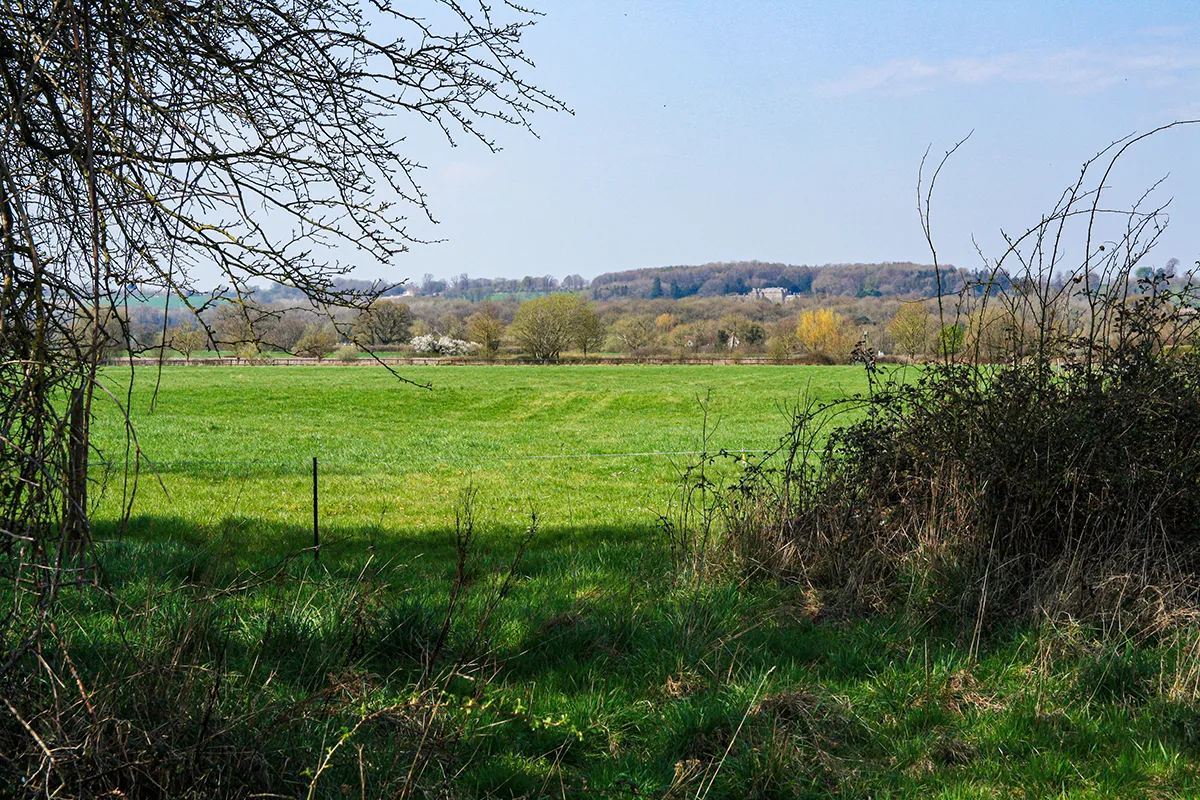
The private client needed a planning‑focused understanding of how proposed changes at Moat Farm would influence the rural landscape setting and views across open countryside. Nicholas Pearson Associates was commissioned to complete a Landscape and Visual Impact Assessment (LVIA) to support decision‑making for the redevelopment of the existing farm facility. The project involved a revised farm layout, a new access road, and associated restorative landscape works, all situated adjacent to Marston Park, a Registered Park and Garden. Our work helped the design team refine the proposals and enabled the Local Planning Authority to understand the likely landscape effects and how the proposals related to the surrounding character, public viewpoints, and the heritage context of Marston Park.
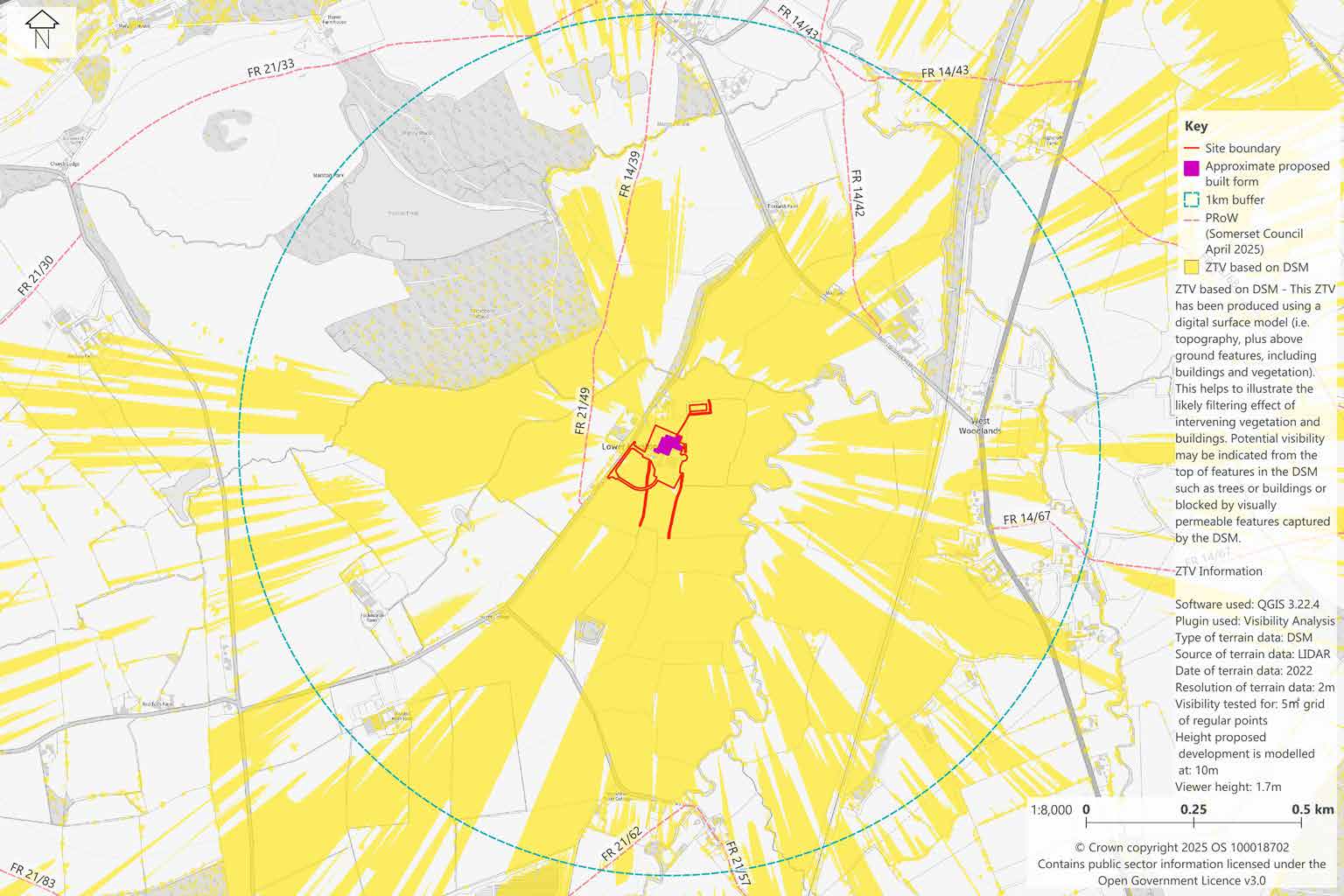
The principal challenge was assessing the landscape implications of a modernised farm complex within open countryside close to a designated historic landscape. The proposals introduced a realigned farm access and additional elements of residential development that required careful testing against local landscape character and key views. Regulatory expectations for LVIA meant our work needed to follow established best‑practice guidance and present clear, evidence‑based findings for the Local Planning Authority. The sensitive context also required a structured review of visibility so that all parties, including statutory consultees, could understand the degree of change anticipated.
Our approach followed recognised LVIA methodology, combining desktop analysis, site appraisal, and structured viewpoint assessment. We reviewed baseline landscape character, topography and vegetation patterns to understand how the existing farm related to wider rural features. The assessment drew upon collaborative input from AZ Urban Studio, the planning consultant , and Richard Parr Associates, the architect, ensuring the appraisal remained aligned with the evolving design. We considered the landscape setting of Marston Park, reviewing how the Registered Park and Garden contributes to local landscape value and how associated views might experience change.. Our process ensured the Local Planning Authority received a clear, methodical analysis of potential effects supported by verifiable visual information and design rationale communicated through structured LVIA reporting.
The LVIA process highlighted opportunities to refine the layout, helping the team develop a sympathetic arrangement of buildings and landscape features. This included reviewing building placement, ensuring the access road alignment minimised visual intrusion, and encouraging the integration of planting to soften the updated farm complex. We worked closely with the architects, so that design elements responded to rural character, local landform, and the wider setting. Landscape measures focused on reinforcing boundary vegetation, maintaining key open views, and managing visibility from publicly accessible routes. The LVIA highlighted where the design could incorporate restorative landscape works, including planting to support the reintegration of the farmstead into its surroundings. The LVIA findings ensured decision‑makers received a balanced understanding of how design responses mitigated potential landscape and visual effects whilst retaining functional efficiency for the farm operation.
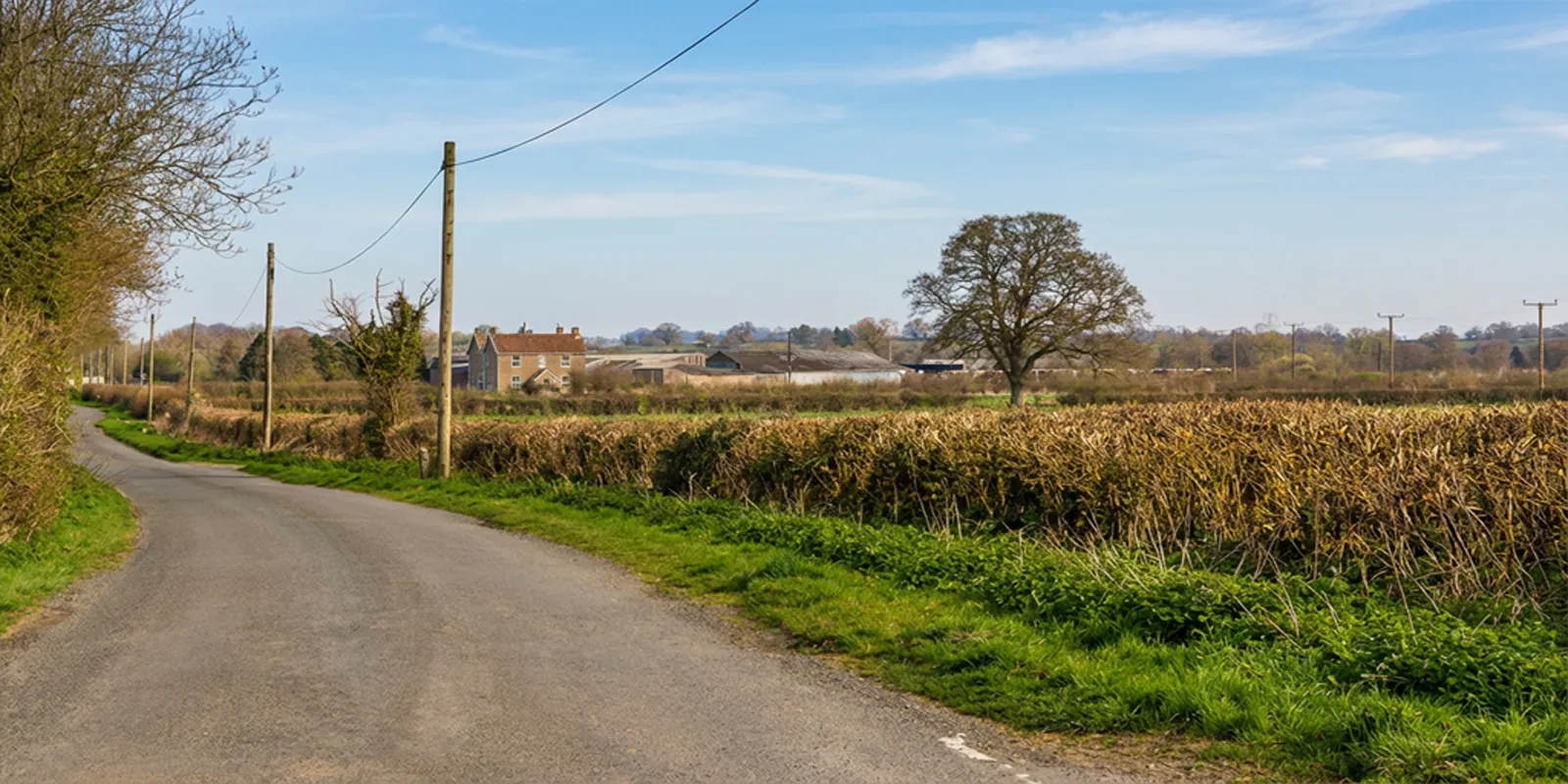
A key part of our role was communicating potential effects clearly to planning officers through a structured LVIA that set out methodology, baseline conditions, viewpoint photography, and visual analysis. Our LVIA outputs helped the Local Planning Authority compare existing and proposed conditions and understand how the development would sit within the rural landscape. By providing clear graphics and structured reasoning, the assessment supported decision‑making and contributed to the effective presentation of the proposals during planning review.
The proposals received planning consent, supported by the comprehensive LVIA submitted with the application. Our work provided the Local Planning Authority with appropriate information on the degree of landscape and visual change and the benefits of removing utilitarian structures as part the provision of a higher‑quality farm facility.
Please contact us to discuss how our landscape architecture team can help you with your next project.
Our values and value-led approach to Environmental Design help you to achieve your project’s potential We get to know our clients and provide pragmatic guidance and design solutions We can be [...]
Read moreOur value-driven approach to Landscape Architecture is designed to help you realise your project’s full potential We take the time to understand your goals and provide tailored design solutions [...]
Read moreOur ecologists will help you understand the biodiversity potential of your site We will get to know your site and build a consultancy relationship that you can depend on Our ecological site surveys [...]
Read moreOur talented team will help you to understand your site’s potential and visualise it’s development opportunities We can provide you with a range of photographic and digital services to suit your [...]
Read more
Creating a Long-Term Vision for Fyne Court The National Trust needed a clear strategy to guide...
Balancing Housing Delivery with Ecology Requirements EG Carter & Co Ltd needed planning...
Delivering Saltram East Country Park for a Growing Visitor Population National Trust needed to...
Shaping a Long-Term Vision for a University in a Park The University of Reading needed a strategic...



